

In part 1, I went over the general role and responsibilities of a webtoon PD at a Korean webtoon company, whether it be a studio or a platform. If you haven’t read it yet, I sincerely recommend reading it before you read it because you’re going to need the context.
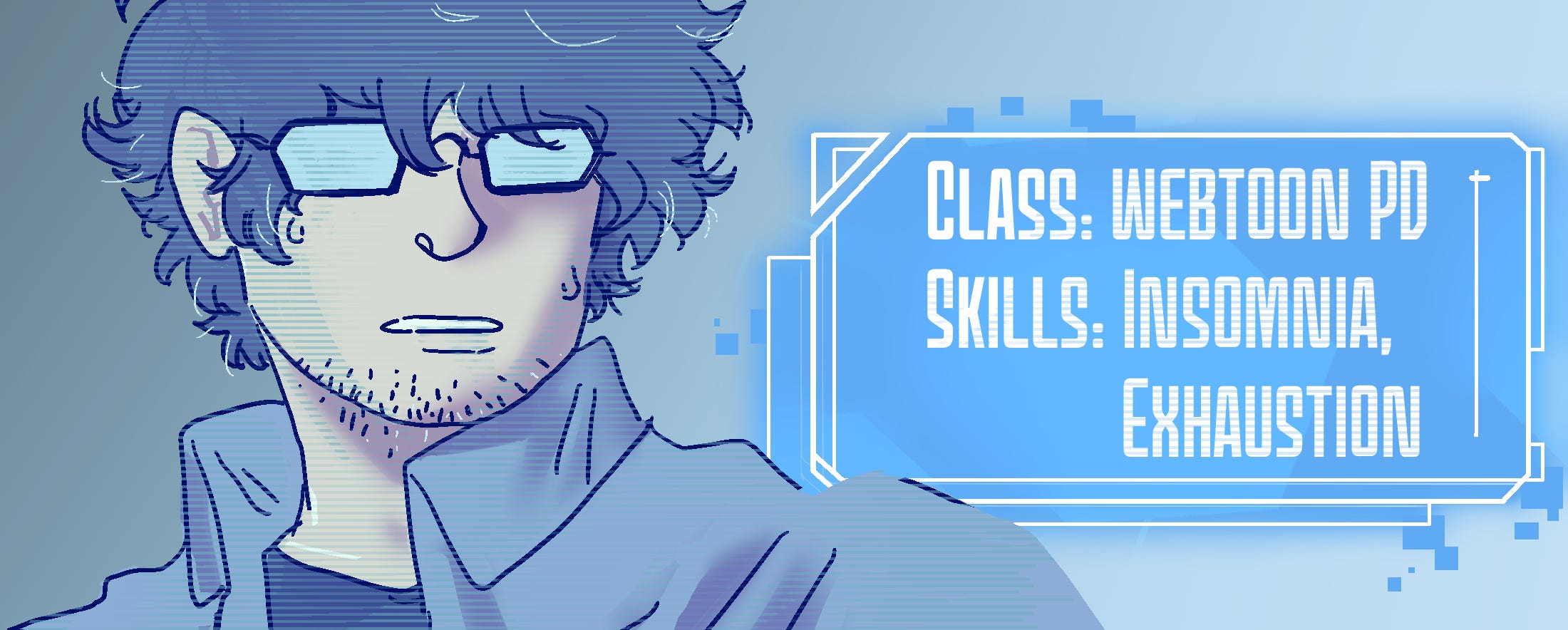
My initial foray into the responsibilities related to being a webtoon PD were a series of meetings I had with the senior PD staff at Big Red. I’d gotten lucky and taken on a few meetings with comic book creators and gotten enough interest that someone recommended I look into it.
It was really exciting, getting to talk to folks who were responsible for the bulk of the revenue coming into the company. And, as a consequence, I came into the meeting with a whole list of expectations. I’d hoped for some sort guidelines or rules to follow in order to contract titles, produce quality stories and gain the trust of creators.
I wanted to know exactly what to do and how to do it.
Instead, I got a hundred stories about a hundred titles that were all contracted differently with creators who had their own preferred methods of communication and thousands of ways that webtoon publication could go wrong.
I didn’t so much get a guide on how webtoon publishing should go as much as a list of errors to avoid.
It was, I thought, an incredibly sloppy way of describing a job.
It was, as I learned, incredibly accurate.
Pre-Publication Hell
One of the biggest pitfalls that can befall a webtoon project is lingering too long in pre-publication. Once a title gets licensed for publication, the lines are drawn and each party understand their role in publication.
The PD reviews and makes the majority of their edits prior to publication. Once those edits are completed, the webtoon is ready to launch.
Of course, that’s one perspective.
Another possibility is that the webtoon gets stuck in pre-production hell until all the edits are completed to the satisfaction of the PD in charge. Or their boss. Either way, it’s a huge whiff for production.
I’ve never experienced it directly. It’s more often than not inexperienced PDs who didn’t catch issues early enough and allowed production to proceed to the storyboarding or line art phase.
If the problems are simple, it’s usually a matter of making subtle changes here and there. But if the problems are deeply rooted, the entire project can be sent back to the drawing board. And any blame is left with the PD in charge for not catching the issues earlier.
The follow-up emails to creators and studios are full of apologies and textual prostrating. Even the kindest creative partners’ responses tend to be tense, just this side of professional. Hopefully, that’s where the edits end. Usually, the road ahead is clear and this was just a bump in the production process.
In the case of studio projects, this means stretching the studios resources without offering more financial incentives. In the case of indie creators, it can mean extending the period of time before their receive their first payment.
Either way, it’s a shit proposition.
A Balancing Act on Top of a Balancing Act
By far, the hardest thing to balance for PDs isn’t just work-life balance, it’s balancing their duties as an editor and as a talent agent/manager.
Most webtoon creators don’t have agents or managers and, naturally, PDs tend to step into the role as needed. They send emails warning about future deadlines and, if deadlines are consistently missed, they send text messages ahead of those emails.
Contracts are digital now, but many PDs block off mornings to deliver contracts in-person outside of Seoul in order to return by the afternoon and finish working for the day.
Creators aren’t just partners, they’re clients. So when the needs of the publisher clash with creators, it’s the PD’s job to find a healthy balance that makes both happy. But just as often, they might earn the ire of coworkers for taking the side of creators or receive a strongly worded email when a creator’s asks are granted.
It happens more than you might think.
Often, it’s not even related to payments or contract terms. It could be requesting a new webtoon cover image to promote a new season. Or asking for additional illustrations to use in marketing. Or a creator asking for their title to appear in promotions.
You know, everything outside of a PD’s role and responsibility in the company.
It’s the classic rock and a hard place analogy. And a PD’s placement in that pecking order is always the nut in between.
Harsh Realities
Audiences gravitate to good stories.
That used to be the rule in the webtoon industry. It was the ideal reality we all wanted to live in, one where good webtoons would inevitably be successful.
But with over 800 new webtoons launching in Korea every month, it is very much possible for “good” webtoons to be lost in the mix. And the same is true for international markets.
I can’t count the number of times I’ve had to defend the publication of multiple webtoons from sales or marketing teams. To justify the cost of publication weighed against future sales in spite of other teams providing statistical proof that the titles weren’t performing.
One specific title I contracted pre-COVID was shot down for promotions, marketing, and social media promotions for months due to poor sales. I literally spent hours in meetings defending the decision to contract the title as well as provide evidence for its inclusion in marketing campaigns, promotions, and front page events.
It ended the year ranked no. 1 in its genre.
But for every success story, there’s at least one webtoon that went the other way. The one that never found its footing or whose popularity on pirate sites far overwhelmed the marketing team who was attempting to draw in a paying audience.
The new rule in the webtoon industry? There is no rule.
The position of webtoon PD is actually a very sought after role in the Korean job market. There are academies, courses, online tutorials that are all geared towards helping people understand the requirements and find their start in the industry.
PDs need to be aware of what’s popular in the industry and what’s not. That means devoting time to reading webtoons, manga, and comics in and out of the office. Most people tend to be fans of print media (which helps), but it can turn into a chore when you spend every day reading for work rather than for fun.
For a lot of people (myself included), it meant when you eventually reached “burn out” status, you were also burned out on webtoons and manga.
Several webtoon studios and platforms shuttered in 2025. And while many of the employees moved on into other roles in the webtoon, manga or content industries, there are stories of entire swaths of PDs simply leaving for different roles.
The tight deadlines for webtoon creators require PDs to, essentially, always be on the clock. Meaning if a webtoon episode is submitted late for editorial, it’s on the PD to make sure it gets through to publication on time.
Honestly, I look back on my time as a webtoon PD with fondness. But, at least for me, there are easier ways to earn a living.
Thank you for the candor in this piece. The structural pressures you describe feel less like isolated problems and more like symptoms of a rapidly industrialized storytelling system.
Interestingly, Japan’s manga industry went through a similar phase during the height of the weekly magazine era, when speed, rankings, and reader surveys shaped creative survival. The tension between artistic voice and platform metrics is not new — but each medium experiences it differently.
Your reflection adds an important human layer to what is often discussed only in business terms.
Hi, I am a former localization editor for Tapas and I'd like to reach out about sharing some insider stories about company culture and management. Is there a way to contact or message you privately?