

For the purposes of this post (and all others really), I’ll be referring to the position of webtoon editor/producer as PD.
This post was written in two parts. One is a very concise and simplified breakdown of the PD position at webtoon publishers as well as how teams operate in Korea.
The other is essentially a rant.
Roles and Responsibilities
This is a general explanation of how PDs fit into the webtoon ecosystem. Specific publishers and studios operate with their own standards meaning the details of the job differ from company to company. But the overall JD is similar.
First, a quick breakdown of what a webtoon PD does.
PDs are generally responsible for 99% of communication with creators, studios and freelancers. They’re not just editors, they’re managers overseeing the entire production schedule of assigned webtoons. They’re also the go-between when additional contracts or licensing is requested for webtoon titles and they’ll even accompany creators when they attend expos or cons abroad.
In many instances, PDs take on the responsibilities editors and agents. Both providing advice and advocating for creators, even when the creators are not employed by publishers or studios. Potentially the hardest part of the job is balancing those responsibilities and loyalties.
PDs have two main roles within a webtoon organization: scouts for new titles and editors for ongoing titles. In the case of new webtoons, PDs often search through Instagram, Twitter, Canvas and other platforms to contact prospective creators and build connections.
Once they’ve made contact, they’re responsible for explaining an overall view of the webtoon publishing contracts as well as the responsibilities of the platform and the creator.
After a creator is contracted, they’re shifted into the active responsibilities of providing editorial reviews and requesting edits as needed (more on this later).
Teamwork Makes the Dream Work
I found an older interview with a PD team lead at Bomtoon, platform owned and operated by Kidari Studio who also owns and operates the Lezhin suite of international platforms. The post is in Korean, but Google Translate does a decent job of making it understandable.
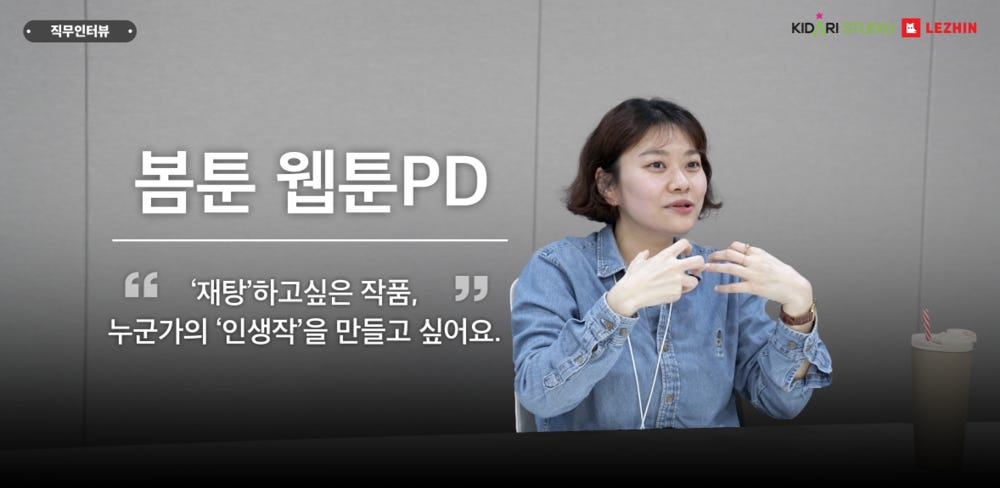
PDs and the editorial departments at webtoon platforms in Korea aren’t overly different from those in other similar industries. There are generally multiple teams, each headed by experienced senior PDs as team leads with multiple assistant and junior PDs stationed under them.
The teams are essentially an apprentice system with multiple juniors learning from one senior. That senior’s editing style, choice of genres, and communication quirks will drip down to their juniors and influence each junior’s editing style.
That means companies can end up with several PD teams with different specialties. One team may focus on indie titles with independent creators, while others may focus on larger studio projects.
But the most important thing? Each webtoon requires the approval of the lead PD before launching on any platform. In that a way, it’s each junior PD’s job to contract, edit, and shape stories that their boss will approve of.
Reviews and Revisions
Up to now, there’s not much of a difference between the webtoon industry and other publishing industries around the world.
But there is one key difference.
PDs in webtoon publishing can hold a large amount of power when it comes to the editorial process. Part of a PD’s job is to know the current trends and read most if not all webtoons in their chosen specialty. That allows them to offer up edits that make webtoons feel new or offer fresh takes on tired tropes.
In short, PDs have final approval over all exclusive webtoons published on their platforms.
Not every PD team in every company exerts that level of control over webtoon titles. The balance of webtoon editorial roles is to help creators tell a good story, but it has to be a story that creative is capable of telling. Hence, PDs cannot ask for edits that fundamentally change the vision of a webtoon if the creator isn’t able to see that vision themselves.
It’s a thin line.
My own experiences as a webtoon PD has been mixed, mostly due to my own inexperience. I learned quick that any non-superficial edits have to be made during pre-publishing production as early as possible. Whether it be typesetting, storyboarding, or story elements, the creator needs time to digest the edits and carry the story forward.
Once a story starts publishing and actually gets rolling?
Edits happen, it’s part of the publishing process. Maybe the PD wasn’t specific enough with their previous edits or maybe the creator misunderstood some direction they were given. It happens.
But then… there’s the other times.
I like to call them the “oof” of being a PD in the webtoon industry.
Stay tuned for part 2 which will publish later this week(end).