

Who is Kidari Studio?
Kidari Studio operates Bomtoon and Lezhin in the Korean market as well as LezhinUS, LezhinFR, LezhinDE, and LezhinTH (along with LezhinX which is essentially abandoned).
Kidari Studio owns Lezhin Entertainment is itself a part of the Daou Kiwoom Group, a large conglomerate in Korea mainly active in financial markets.
Kidari Studio is an active company in the webtoon industry. In addition to actively producing webtoons through Studio M (an adult-oriented webtoon studio) as well as through their own in-house studio, they publish independent creator titles through Lezhin.
Recent Headlines
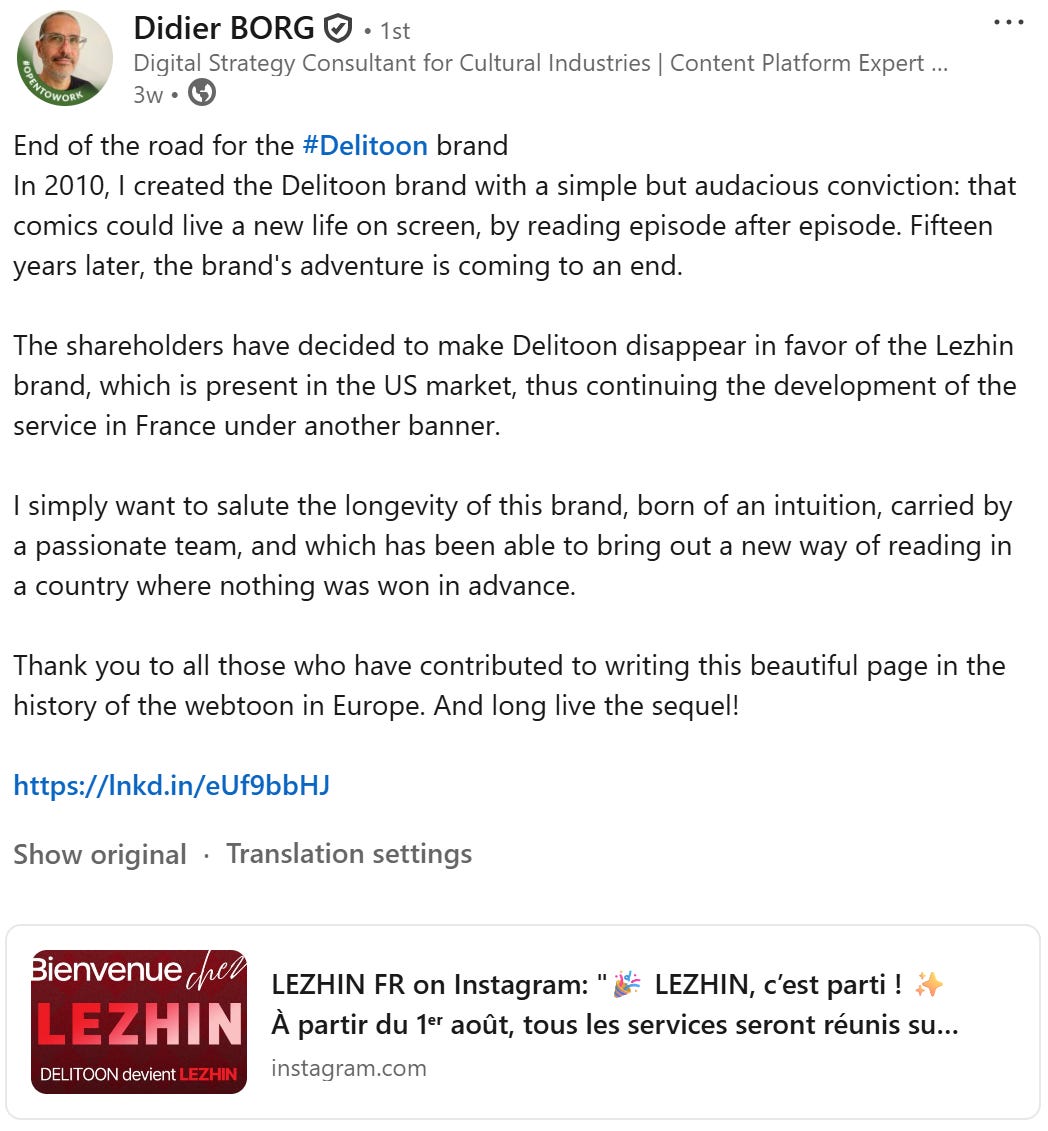
Recently, they re-branded their international Delitoon and Le Bontoon platforms, renaming and combining them into LezhinFR and LezhinDE as a part of taking full advantage of the Lezhin brand name in international markets.
One of their larger moves was to create an actual storefront in Paris at which they sell physical merchandise. The only other store dedicated to Lezhin/Kidari Studios merchandise is at the HQ in Seoul, South Korea. In Korea, they’ve held multiple pop-ups and ramped up physical merchandising for popular BL titles published through Lezhin. The merchandise push has been noticeable domestically with coordinated marketing and sales promotions targeting BL audiences in Korea.
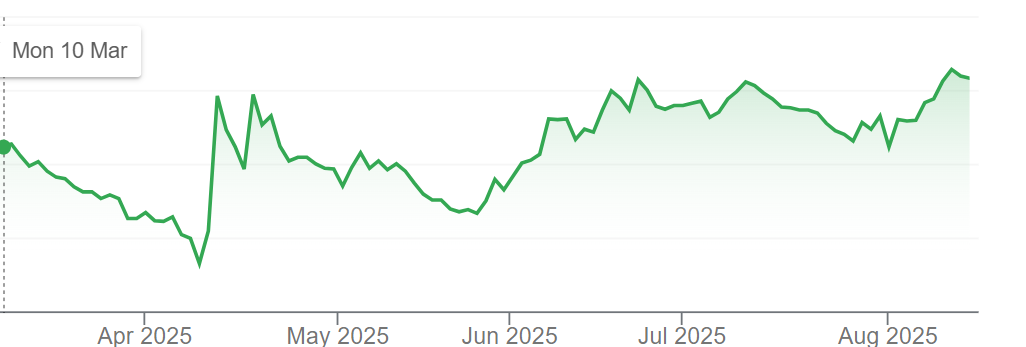
The biggest surprise is in Kidari’s stock which has had massive ups and downs during Q2 (and more since then). Much of the movement is due to outside factors like the Korean President visiting a webtoon library as well as WEBTOON’s own rise in the US.
To sum up, Lezhin/Kidari have been active on the ground, but nothing major or groundbreaking thus far. The company seems to be focusing on the basics and aiming for stable numbers rather than large swings.
Numbers By the Numbers
Kidari Studio’s push into domestic merchandising is paying off with 5.95 billion KRW in revenue, up 190% from last quarter’s 2.05 billion KRW. Overseas merch grew 0.55% to 1.4 billion KRW, but considering the international market is largely untouched (with the exception of France), this shouldn’t be a concern.
The bigger concern is the digital webtoon platform division. The Korean market grew 3.85% in Q2 to 30.33 billion KRW but the overseas revenue shrank 2.62% to 11.44 billion KRW.
Kidari Studio’s report states that their current strategy is to license webtoons to larger, third-party platforms in order to grow their business. This is in line with the licensing of multiple webtoons to WEBTOON US like “Light and Shadow” and “Boutique at 97 Sheldon Street”.

The merchandising sales are largely attributed to Lezhin webtoon IPs and the Jaymee Shop, the digital storefront operated by Kidari where physical merchandise is sold. Rebranding their European businesses to the Lezhin name makes sense considering (a) the international popularity of BL and (b) the difficulty in competing with Naver Webtoon in mainstream genres.
The webnovel division of Kidari is largely licensing as Kidari doesn’t operate a webnovel platform directly. The revenue has seen a slight 0.55% increase to 1.4 billion KRW. The film division, on the other hand, saw a drop of 64.12% to 873 million KRW in Q2 for the domestic market while the overseas market came in at 402 million KRW.
Looking Forward
Stagnancy in the webtoon platform division isn’t good, but stability is. The growth of WEBTOON in Q2 is a sign that Naver is dominating the mainstream webtoon market and as long as they don’t enter the BL genre directly, Lezhin/Kidari will be able to hold on to their market share.
The Disney deal is a sign that Naver will, at least in the short-term, continue to focus on family friendly content rather than “fringe” genres like BL and GL. And as long as that continues, Lezhin/Kidari can continue to expand horizontally in the market.
In the future, I’ll be keeping an eye on their overseas revenue and any news of expansion. Currently, Lezhin/Kidari are essentially locked into the platforms and markets they’re currently in insofar as operating webtoon platforms. With the European market being a “no man’s land” for Korean webtoon platforms, we’ll have to see if and how they’ll be able to manage in a world where WEBTOON is growing without limit.