

I don’t normally publish articles about society and culture, but this was a topic I’ve been reading about for the past few years and it’s connection to Korean webtoons gave me the excuse I needed to write a bit about it. Hope you enjoy.
One of my favorite webtoons that I started reading early on in my career was Ultimate Outcast (최강왕따) on Lezhin. It was also one of the first webtoons I was tasked with editing the English translation for.
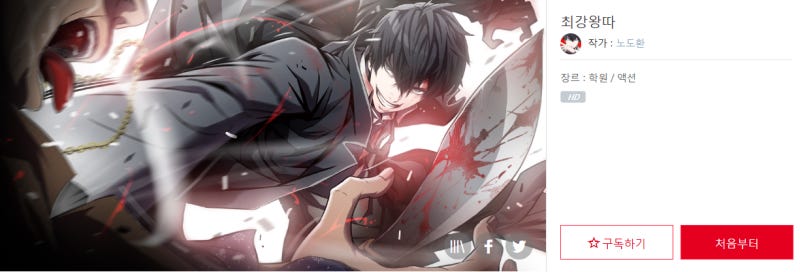
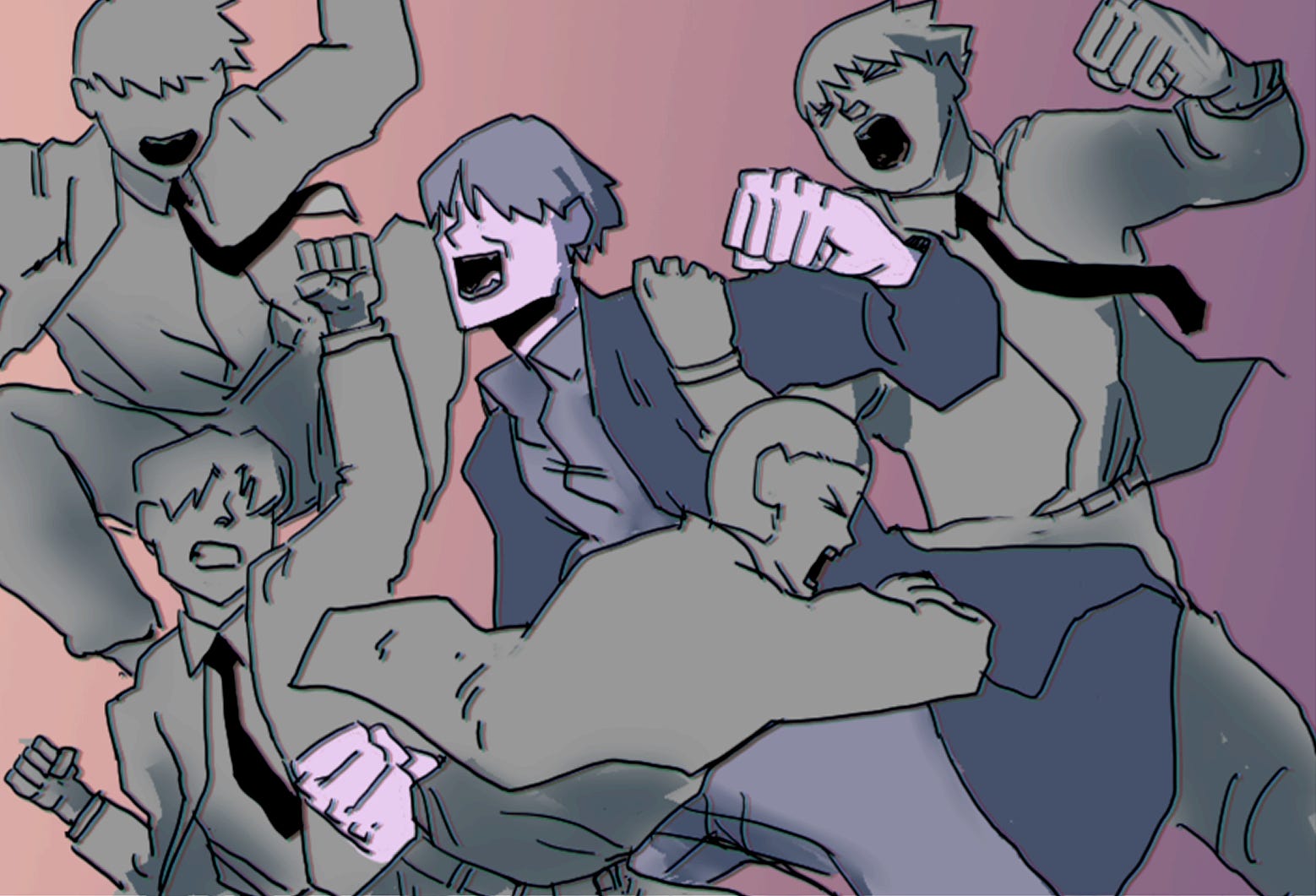
The story of a bullied student rising through the ranks of his high school and defeating bigger and stronger students in shonen-style combat was immensely satisfying to read.
Then, I realized it was a whole sub-genre in webtoons.
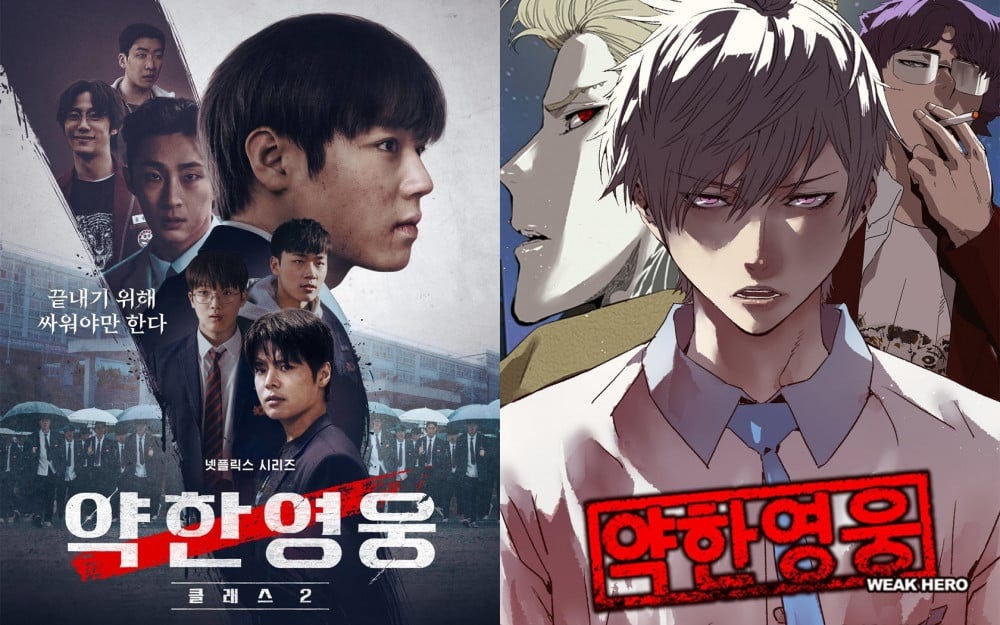
The “hagwon” (school) genre of webtoons primarily deals with students dealing with life in the high-stress environment that is high school in Korea. Early hagwon webtoons focused on high school romance, drama, and the high-stakes of the CSAT (college entrance exams that are given only once a year).
But hagwon-action titles? They were all about bullying.
Weak Hero and Lookism are key examples of hagwon action titles, focusing on student protagonists who learn to fight back or take advantage of the broken education system in Korea. Basically, while students might be the villains of the story, they’re also the heroes.
At least, they used to be.
Won’t Someone Think of the Children
It might sound trite, but the Korean government has actually been quite active when it comes to combating the bullying epidemic in Korea. And while you might think that teachers are the solution to the current crisis, for a while they were considered the problem.
Back in 2010, Seoul announced one of the biggest shifts to Korean education with the passage of laws explicitly outlawing corporal punishment. While physically punishing students was (sort of) frowned upon in Korea until that point, it was entirely legal.
This was followed by enforcement laws which caused a seismic shift across the entirety of South Korea. It’s important to remember that pre-2010, corporal punishment wasn’t just a thing. It was the thing.
In a recent survey by the conservative Korean Federation of Teachers’ Association on teachers in Seoul, nearly 70 percent of the respondents said corporal punishment is needed at schools. The teachers’ group also filed a petition to the ministry to legislate a law which permits corporal punishment under limited circumstances.
It wasn’t long before other regions moved to follow suit and this regional ban became a blanket ban officially outlawing the use of corporal punishment in educational institutions.
The removal of corporal punishment wasn’t just a step forward for student rights, it was a control measure placed on faculty and staff at educational institutions. The government drew a line and put severe legal consequences in place if anyone crossed it.
And then the next shoe dropped.
Article 9 of the South Korean Criminal Act specifically protects minors between the ages of 10 and 14 from criminal prosecution in violent crimes. Instead of jail time, their criminal records are sealed (as minors) and they are sentenced to community service or reformation programs.
Yep. Middle-school students can smoke, drink, fight, steal, and commit a host of other crimes and face no criminal prosecution.
As a result of Article 9 becoming common knowledge, crimes involving juvenile offenders have surged across Korea. The number of criminal offenders rose to 21,958 in 2025 from 10,026 in 2021. Notably, sex crimes rose to 1,268 from 818 (Chosun Daily).
Worse still? The number of criminal reoffenders for juveniles aged 10 to 14 was between 12 and 13%. Nearly triple the rate for adults.
Not only are more children committing more crimes, they’re returning to commit more crimes at higher rates than adults. Shit.
Teach Them a Lesson
That’s where “Get Schooled” comes in. Or maybe I should call it “Teach You a Lesson” which is the name of the live-action adaptation currently on Netflix.
For those who haven’t watched it, the story takes place in a South Korea where campus violence has grown out of control. In response, an educational bureau is established to use any and all methods to discipline students and reform schools.
Basically, a bad-ass adult goes around kicking the snot out of high school kids.
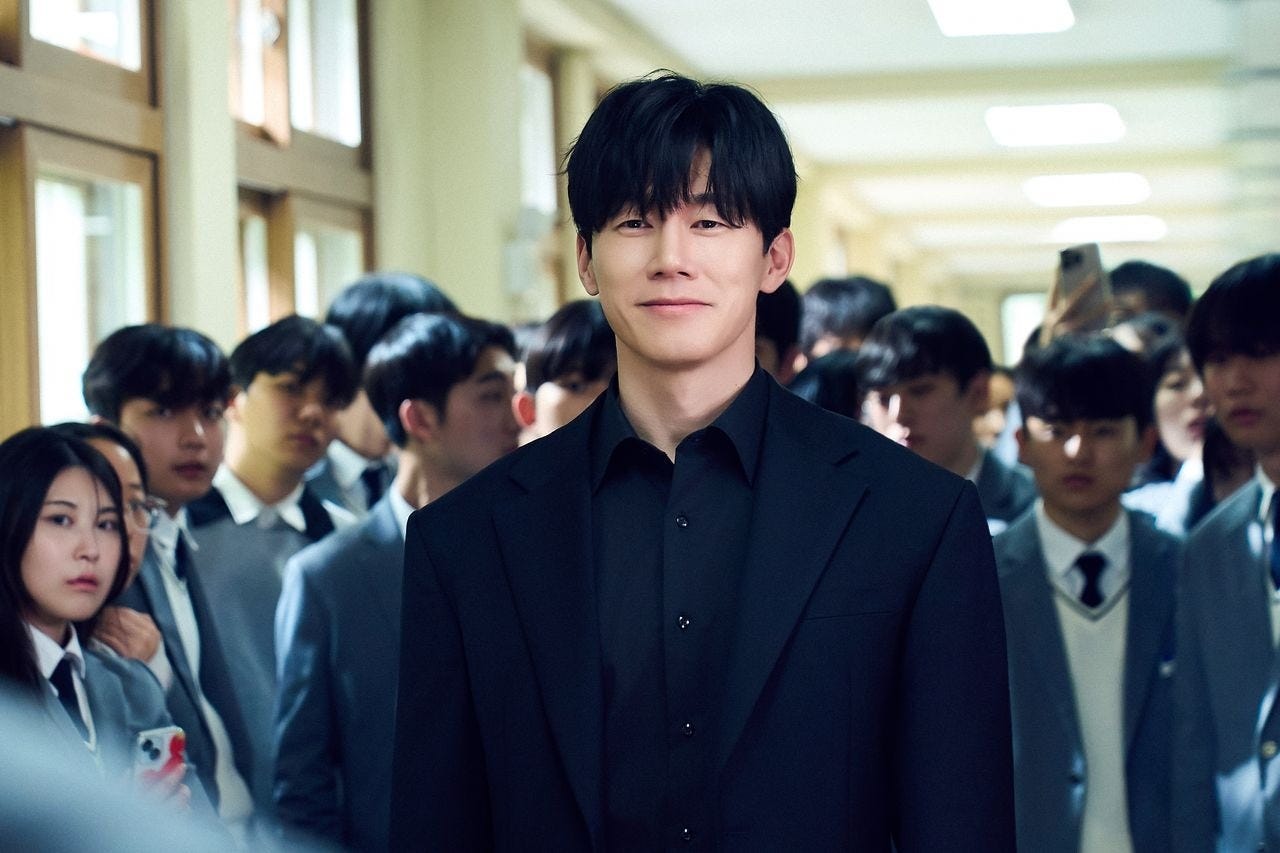
I’m not kidding. The main character is a fully-grown adult and the trailers immediately show him beating on uniformed high school students.
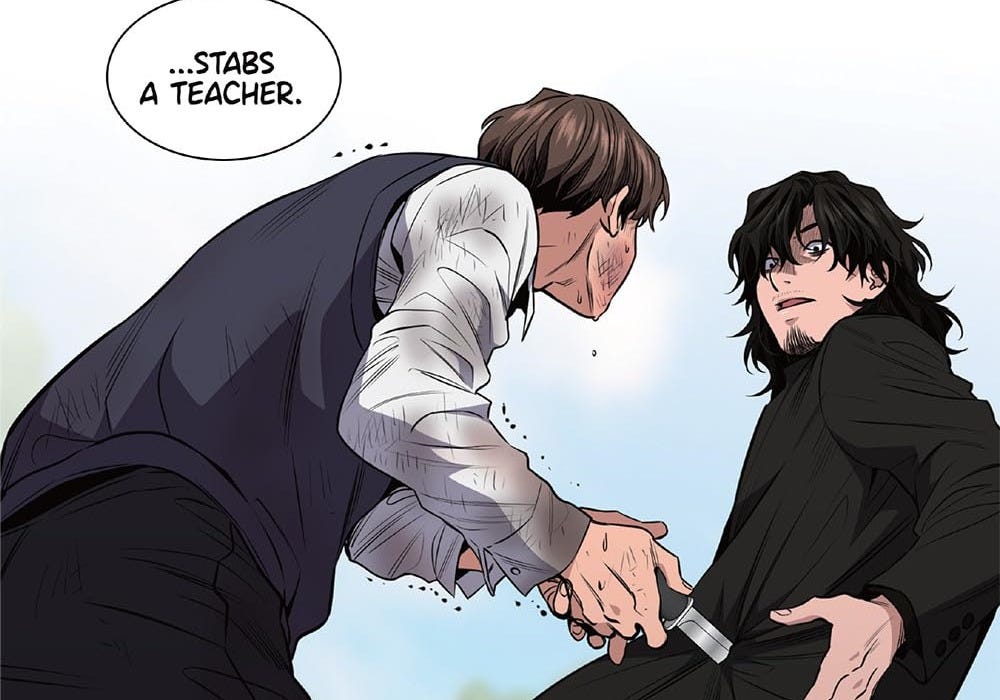
If hagwon action titles were wish-fulfillment for a younger generation that grew up at a time when teachers and authority figures turned a blind-eye to bullying, then these new stories are wish-fulfillment for a generation of authority figures who have no recourse to stop the bullying that remains prevalent to this day.
It’s immediately reflective of a living and breathing society issue that no one has a solution to.
And… that’s pretty cool.
More than anything, “Teach You a Lesson” (and it’s webtoon counterpart, “Get Schooled”) are a reminder that Korea excels at telling stories that reflect societal ills. And that, often times, these stories are compelling to audiences around the world.
I highly recommend watching the K-drama. It’s actually quite good (so far) and while the story is quite pointed and doesn’t present much depth, at the very least it’s dumb fun.
I should note that the translated versions of “Get Schooled” (the original webtoon) have been removed from many of Naver’s platforms due to depictions of a black character and racial slurs. It’s pretty shit and I can’t say I’m surprised Naver let the series continue in Korea, but then deleted it from international platforms.
And I assume that’s why the Netflix adaptation is called “Teach You a Lesson” in order to distance itself from the controversial webtoon.
I haven’t watched the entire series yet, but I assume the House of Tudum left that particular story out.