

As long as I’ve been working in the webtoon industry, the idea of tentpole titles has been a hot topic of conversation. Tentpoles are titles that lift the entire market, often times platforms by providing high viewership and attention which can be used to increase viewership of other titles.
And while tentpole titles are necessary for webtoon platforms, the assumption has always been that if a webtoon were big enough, it could do that for the whole industry. That’s what we’d call a mega IP.
Before we get started, I think we need to define the concept of the “mega IP”, because it’s a concept that exists in multiple industries with different preconceptions of what it is.
But in the webtoon industry, a “mega IP” is expected to do three different things:
Stand out internationally as a standalone webtoon IP
Find success in another medium outside of webtoons (film, video games, etc.)
Increase recognition of the webtoon medium
Got it? Great, because now we get to pick it apart.
The Solo Leveling Conundrum
There are plenty of webtoons that are or have published in the international market as a “mega IP”. The Remarried Empress is a good one and, considering a new K-drama adaptation is currently slated for Disney+, one could argue it’s a successful one. But the obvious is Solo Leveling.
I still remember taking meetings for years at conventions where everyone I met was asking if I knew what the next Solo Leveling coming out of Korea would be. Literally days of meetings where that was the only title people wanted to talk about.
And why wouldn’t they?
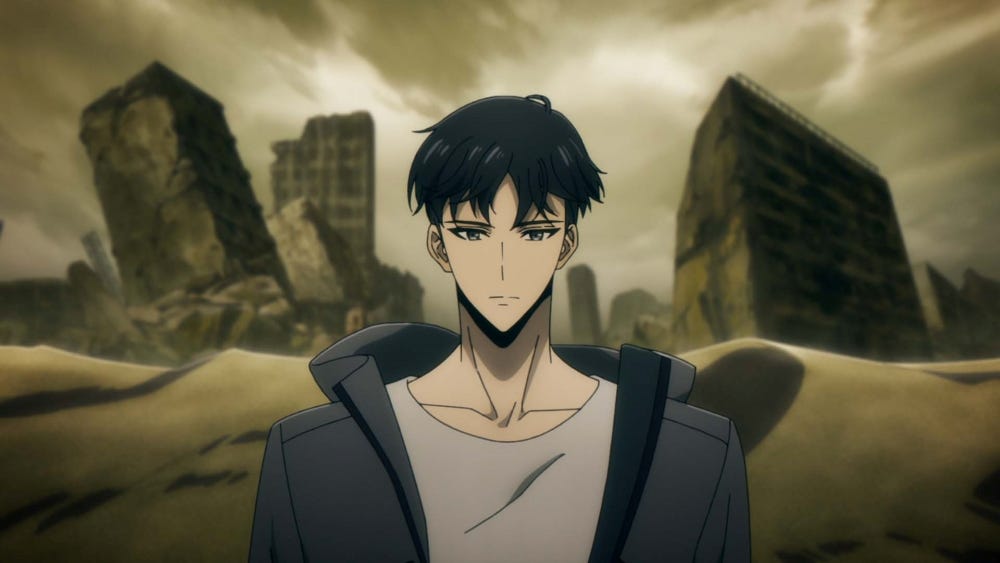
Solo Leveling started as a massively popular webnovel which was translated into a massively popular webtoon. And now, that webtoon has spawned a sequel, a mobile game, and an anime.
So, is Solo Leveling a mega IP? Yes.
But it’s not a model that any webtoon IP is looking to follow.
Solo Leveling’s anime came out of the gate with amazing action scenes and a story that’s compelling enough to have taken over social media for months at a time. At a time when there are a plethora of isekai action titles being published and produced in Japan, Solo Leveling made a massive dent in the preconcieved notions of what webtoons and animes based on webtoons could do.
If that weren’t enough, the Solo Leveling mobile game hit hard in Asia making it likely the most successful moblie game based on a webtoon IP.
But the sequel, Ragnarok, hasn’t hit nearly as hard. Everyone agrees that the art is great, but the story hasn’t caught audiences by storm like the original. And having a staggered international release was… a choice. Not a good one, obviously.
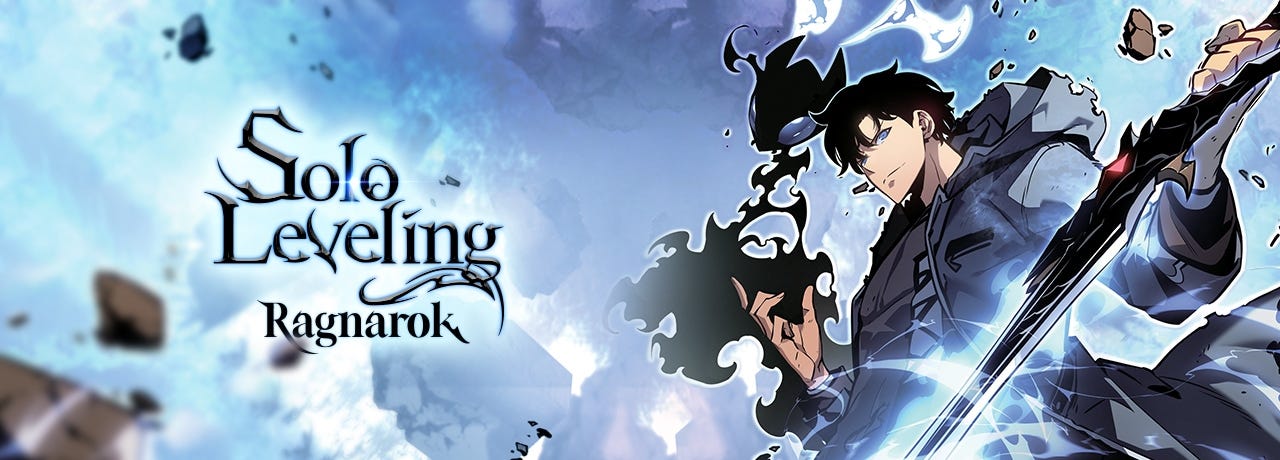
Did it stand out as a standalone webtoon? Yes. Did it find success in another medium? Yes. Did it increase recognition of the webtoon medium? Absolutely.
Is Solo Leveling a mega IP? Yes. But the lack of licensing, merchandising and financial return in comparison to international heavy weights like Naruto, Jiujistu Kaisen, or even Invincible it pales in comparison.
Solo Leveling is the most successful example of a Korean mega IP, but it would be hard to make the argument that it’s a successful one.
The Platform Problem
Obviously, the topic of this blog post didn’t come out of thin air. It stems from a Naver WEBTOON story that got picked up in Korea and internationally. WEBTOON stated that their strategy is to cultivate a “mega IP” that expands a webtoon into Netflix dramas, animations, games, merch and more.
More specifically, Kim Yong-su (president of Webtoon Entertainment) was quoted to say “Our goal is to grow mega IP that can stand alongside global top-tier IP.”
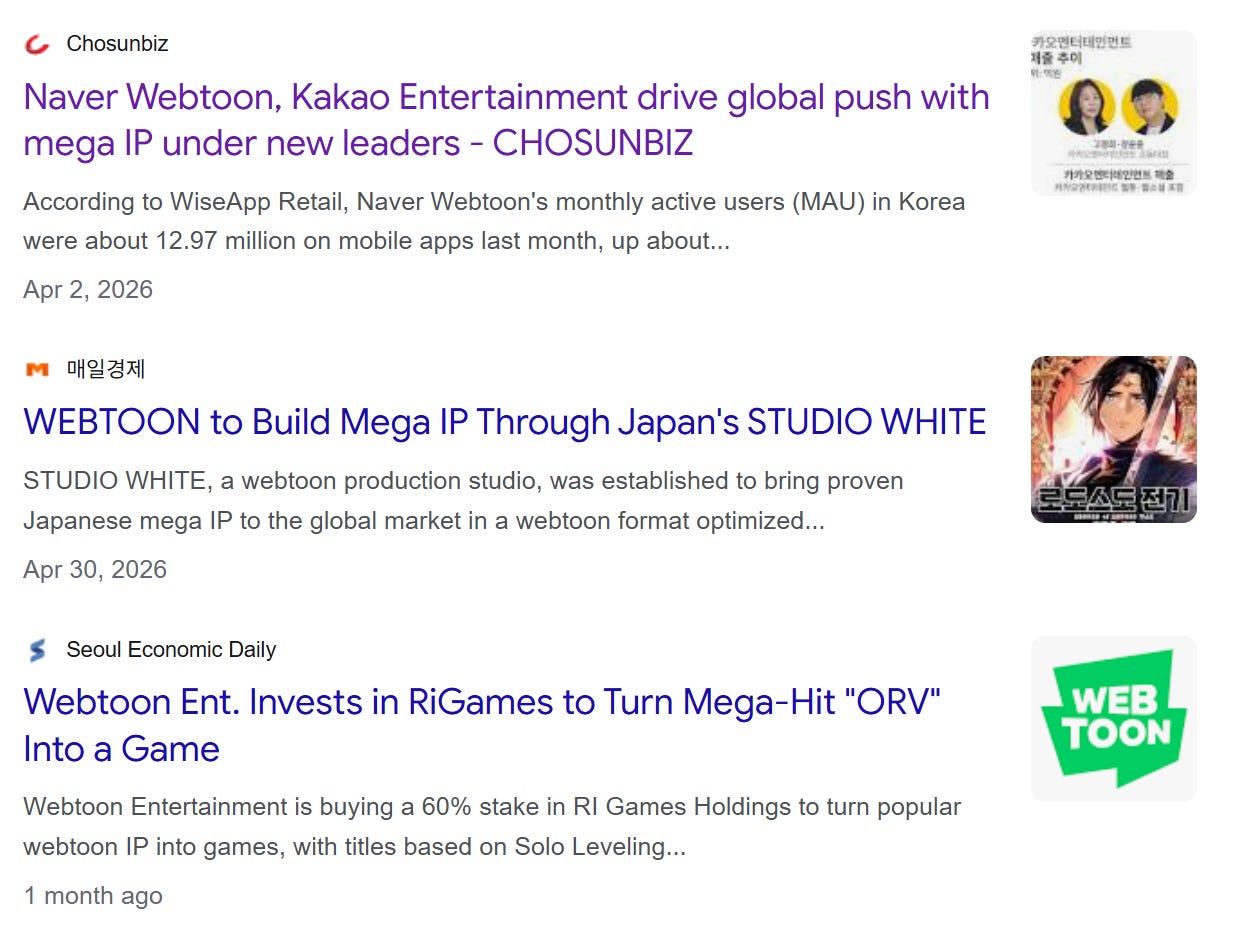
Since then, it’s become a buzzword for Big Green, getting recycled and trotted out over and over again, most recently for press releases for the Record of the Lodoss War webtoon launch and again for Naver’s investment in RI Games.
In theory, the biggest comics publisher on the planet announcing an iniative to cultivate and grow an international mega IP should mean something. That’s going to mean more investment in content, talent, and resources overall.
Just one small problem.
