

I, like many millenials, grew up watching network television. Weekday afternoon cartoons and Saturday morning shows like Batman the Animated Series, Power Rangers, Yu-Gi-Oh, and, of course, Pokemon.
And then, inevitably, my parents bought me BtAS toys, Power Rangers shirts, Yu-Gi-Oh cards, and Pokemon games.
That evolved into me… buying BtAS toys, Power Rangers merch, Yu-Gi-Oh cards, and Pokemon everything.
The content-licensing-merchandising cycle isn’t new. My favorite example is an old diagram at Disney which, although it’s outdated and more complex than I would’ve imagined, lines up perfectly with my childhood experience as a kid growing up in Southern California.
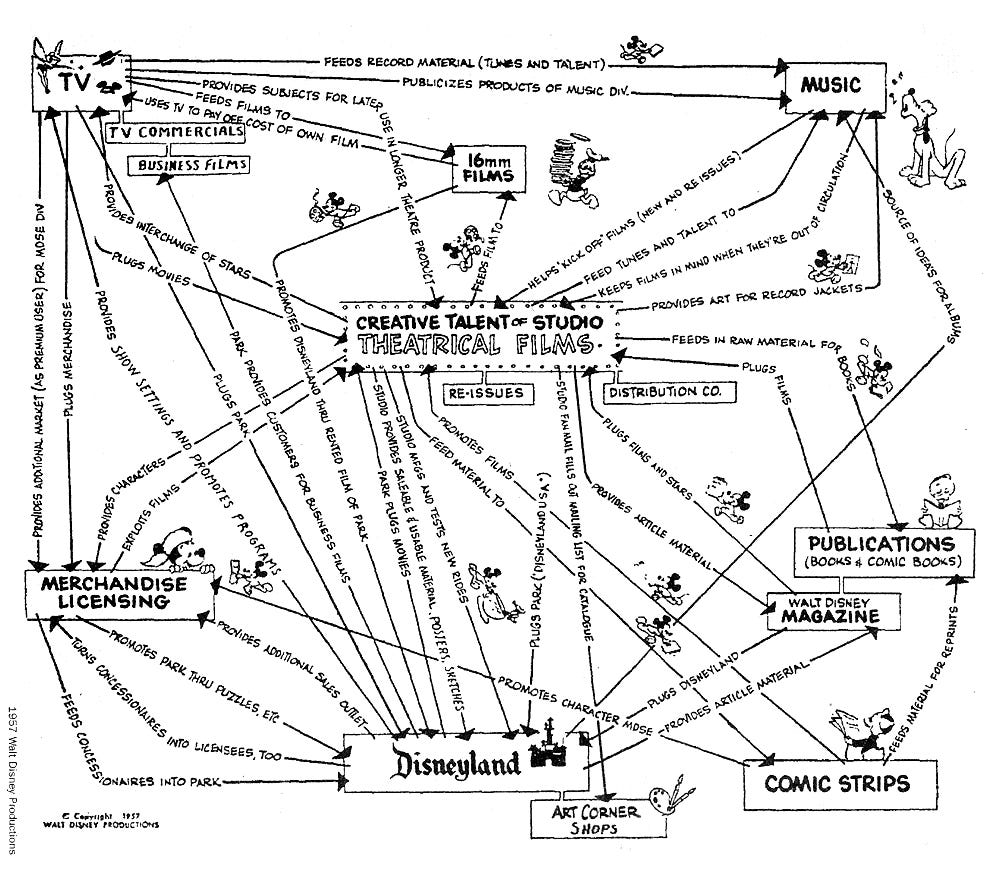
The cycle creates content (books, movies, TV shows, songs, etc.) and then finds ways to monetize that content through licensing, merchandising, or (in the case of Disney) a theme park.
Basically, create a TV show, book, movie or song (or game) people enjoy, then sell them something related to what they justed watched/read/listened to/played.
And aside from the fact that the medium has shifted from movie theaters, network television and radio to internet-streaming-everything, the cycle hasn’t evolved much. See something interesting on Netflix, Crunchyroll or Paramount+? Go to Target the next day and see how many of those IPs are now on the shelves.
And there’s a very simple reason for all that: content isn’t awfully profitable.
What about webtoons?
Just to clarify, I’m talking about the industry as in “small w” in the header. That being said, I’ll be talking a bit about “big W” as in Big Green below.
First, let’s make one thing clear: WEBTOON (Big Green) is the world’s biggest publisher of comics. That makes the webtoon industry, likely, the world’s biggest publishing medium.
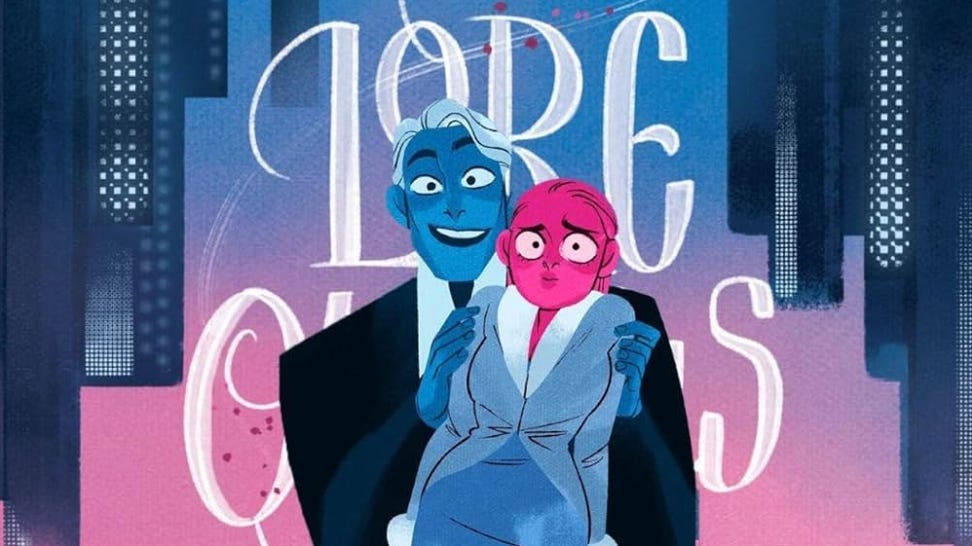
Thus far, the industry has succeeded on multiple fronts. Print licensing into larger markets like France, the USA, and Germany have yielded mixed results but several large scale successes. Homegrown titles like “Lore Olympus” have been exceedingly successful, but “Solo Leveling” likely tops the list with notable successes in the BL market with “Painter of the Night” and “Love is an Illusion!”
There have been misses, of course. Less public, but every catalogue has a handful of titles that have crossed the vaunted million view mark online only to flop on shelves. Five years ago, publishers were chomping at the bit to license the next “Solo Leveling”. But with handful of failed licenses and titles that havean’t cleared warehouses, print publishers are taking a more measured stance.
Silver Ticket or Silver Bullet
Onscreen adaptations have been a mixed bag.
Studio N, Naver’s film licensing division dedicated to turning their digital hits into… well, digital hits with moving pictures.
Specifically with K-dramas.
“Teach You a Lesson”, “All of Us are Dead” and "Bloodhounds” have all done well while Kakao Entertainment had one of the earliest hits with “Business Proposal” being a major level-up for the Korean enteratinment industry as a whole. “Itaewon Class” likewise hit hard and heavy, but neither IP amounted to more than a flash in the pan. Yes, throngs of fans watched each new episode. No, there was no wave of merchandising or licensing that came after.
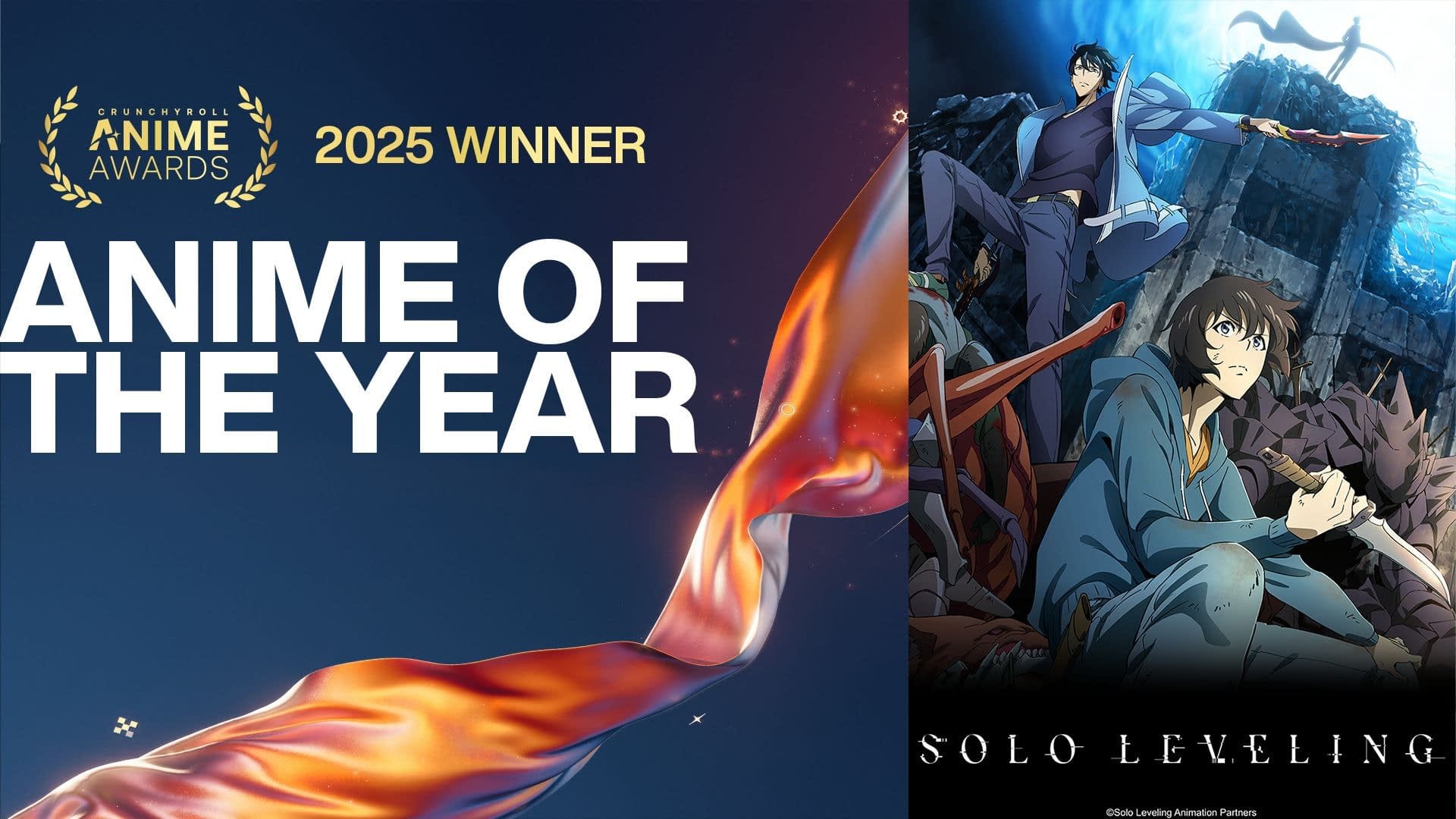
“Solo Leveling” is in a similar, albeit different, situation.
The anime is undeniably popular, bringing new audiences into the webtoon market and infusing life into the already dominant action-fantasy genre. But thanks to licensing rights going to Japanese investors on the anime… it’s unlikely that REDICE or Kakao have many rights to licensing or merchandising.
While audience acclaim might be a worthwhile goal… it’s hard to say that any K-drama adaptations of webtoon IPs have been anything more than one-hit wonders before fading into the streaming catalogue.
Short-Form Gold
Earlier today, Mashable put up a post proudly proclaiming “WEBTOON is turning 6 fan-favorite webcomics into microdramas”.
Short-form content (because I refuse to call them microdramas) is, of course, the next frontier of easily digestible and endlessly monetizable digital gold. The way it was pitched to me was that short-form is the motion picture version of webtoons. And that is in no way an accident.
“We actually just borrowed a lot of the webtoon model from content publishing to monetization” is literally what was told to me by the CEO of one of Korea’s short-form platforms.
