

On October 21st, the World Webtoon Festival in Jamsil, Seoul hosted a panel featuring two webtoon producers from Kakao Entertainment and Kakao Webtoon. The panel itself was aimed at offering advice to prospective webtoon creators as well as aspiring webtoon producers in Korea.
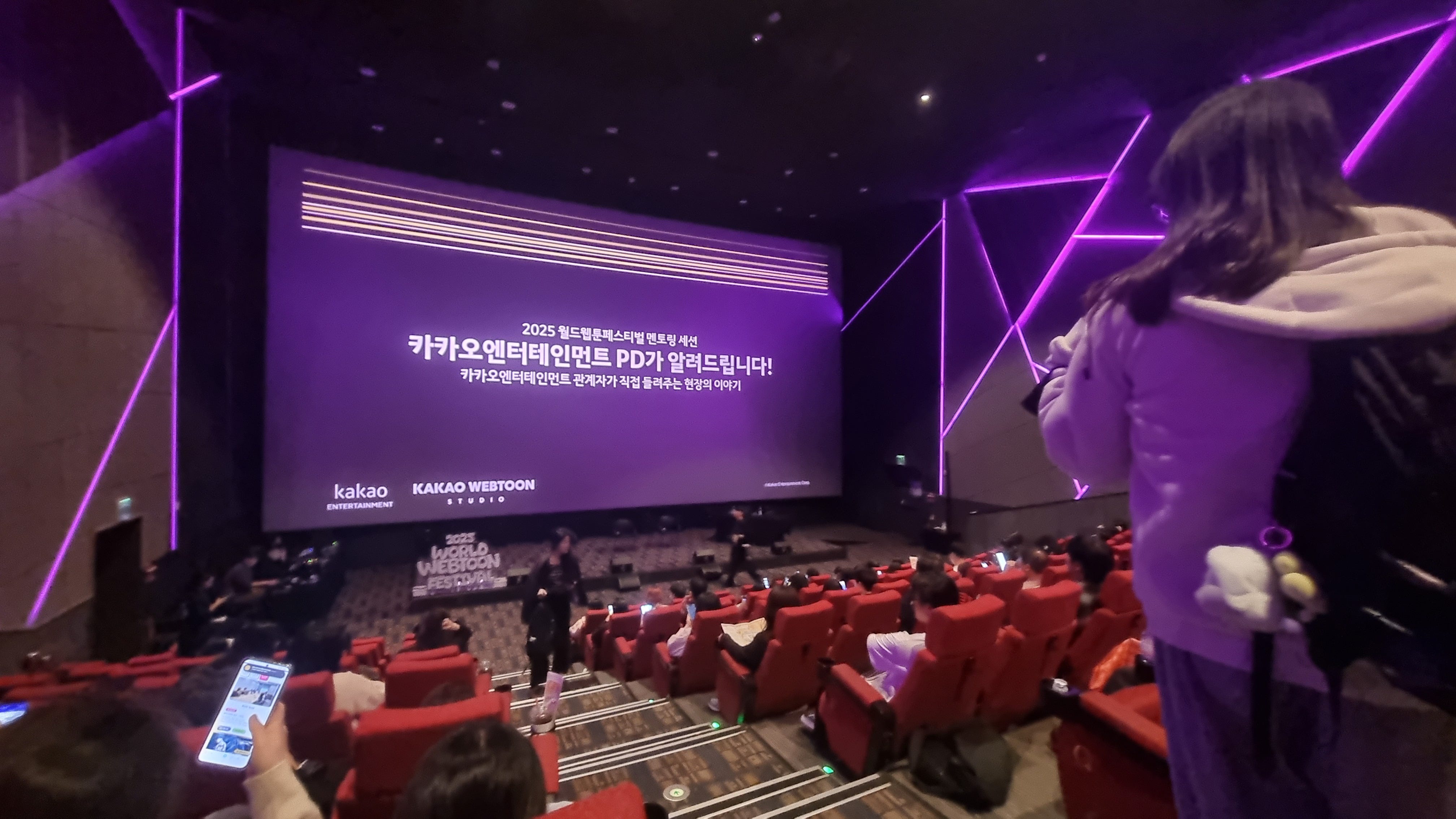
Yesterday, I was lucky enough to catch a panel session featuring two webtoon producers from Kakao Entertainment and Kakao Webtoon. For the uninitiated, yes, they are two separate entities in the Kakao umbrella.
And no, I don’t know what the difference is.
The webtoon industry has reached peak maturity here in its home country. Enough so that over 14,000 webtoons were “launched” on platforms in 2024 with about 9000 being new titles (excluding re-launches).
So when PDs at Kakao review webtoons, they base their review on how the webtoon holds up against existing titles whether they are currently publishing or completed works. The same went for the PD team at Lezhin as well as Toptoon during my tenures at each of those companies.
The truth is that each webtoon PD reads up to (and often more than) 20 series’ a week when it comes to published works while the number of submissions and amateur projects is limitless depending on the season. So when an application or contest submission comes in, it’s judged against a library of titles that came before it.
Hitting A Moving Target
While a webtoon PD’s job is to secure contracts and publish “good” webtoons, there’s really one accepted standard for “good” webtoons: revenue.
And while the industry has shifted back and forth on the definition over the past decade, most of the time a PD’s success is judged based on how many top-selling webtoons they’ve contracted for a publisher.
That means looking for mass-appeal, staying up to date on trends, and keeping apprised of recent releases on rival platforms. Hence, the “moving target” analogy.
The problem is, there are plenty of “decent” webtoons being published every day on Canvas or social media. And filtering out the “good” webtoons is a qualitative matter of opinion that changes from PD to PD.
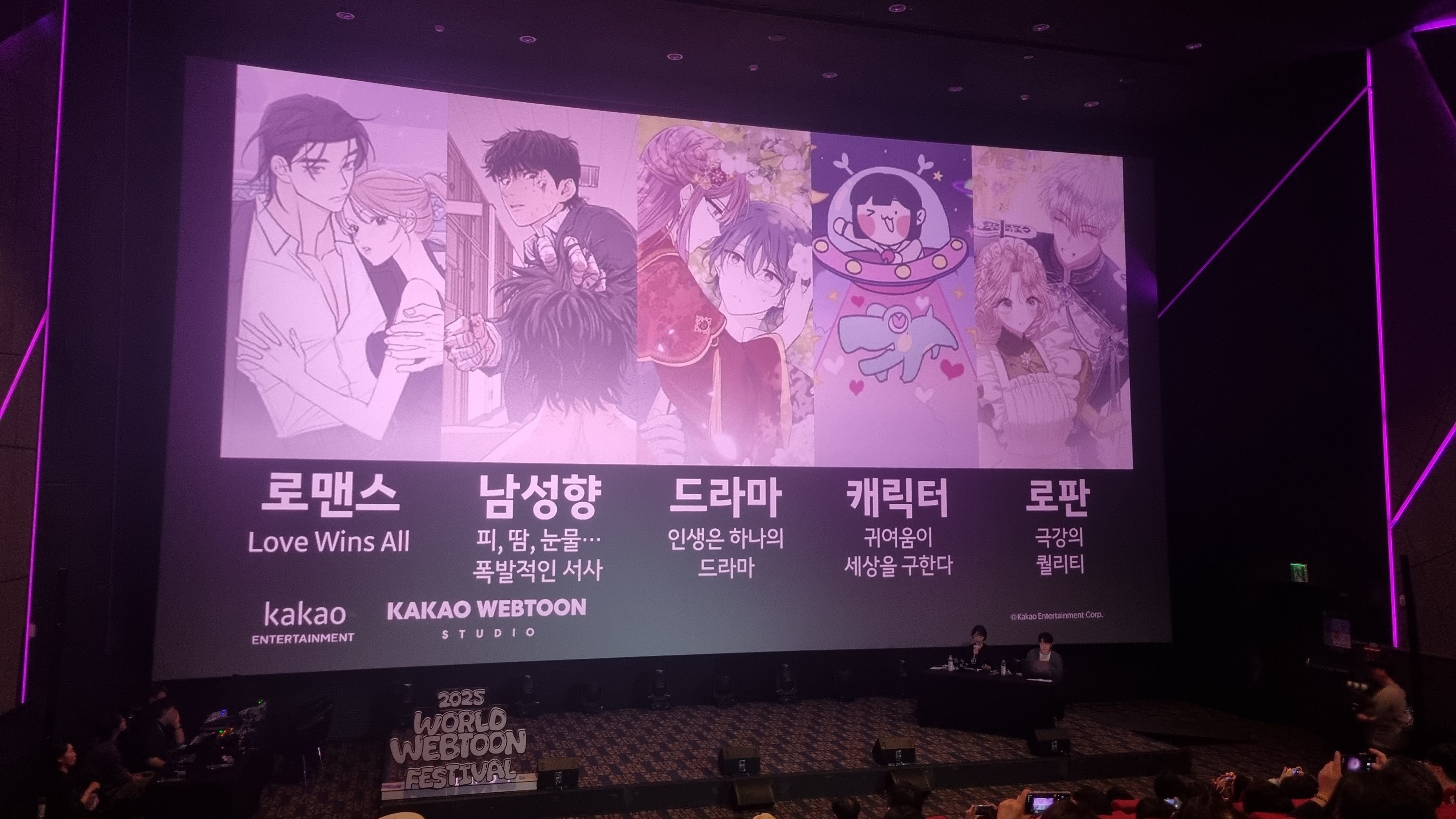
Included with the panel was a set of standards by which PDs at Kakao judge and review webtoons. And while I’ve talked to many PDs about their standards for determining whether a webtoon is worth contracting or not in the past, I’ve rarely heard it explained so succinctly. Specifically, two aspects which give greater insight to the industry as a whole.
The “10 Cut” Rule
One of the most obvious differences between free webtoons and premium webtoons is quality. But in the current age of webtoon publishing, it isn’t enough to tell a story well. It has to hook the reader before they’ve had the chance to lose interest.
According to one of Kakao’s PDs, they look at the first 10 cuts (or panels) for the hook.
Most publishers have a similar standard, but this is the first time I’ve heard of a “10 cut rule”. My experience was generally in the “first episode” or, at worst, the “first-half of the first episode”. But the panelist reminded us all that we are living in the age of TikTok and YouTube shorts.
You get your audience quick or you don’t get them at all.
This stands at odds with other storytelling techniques which can focus on drawing in readers slowly by slowly ramping up tension or introducing world-building elements. And while that is important, it’s just as important to realize that over 9,000 new webtoons were published in Korea in 2024 with 15,000 “new” titles (which include re-launches) on multiple platforms.
Also, speaking of world-building…
Characters Can Change Everything
Characters were the most emphasized point of the panel. Both PDs emphasized the need to create characters (specifically main characters) who drew readers in and kept them coming back.
For example, a PD mentioned they had read a webtoon long past a drop in quality because of how much they fell in love with the characters. But the characters are also the main factor in reusing tropes and cliches while keeping the story fresh.
This flies directly in the face of “world-building” literature which places equal importance on fleshing out the worlds that characters live in. When you look at the littany of isekai webtoons currently on the market, it’s quite true that it’s often the male and female leads attract readers to tired, old genres. But when you dig into each title, it’s those same characters that act as agents of change to really allow for these titles to feel fresh or new.
What the female lead was a gamer? What if the male lead was a masochist? What if there was no female lead? What if the truck driver was isekai’d instead?
These are literally plotlines for webtoons that have been published in the isekai sub-genre in the past 6 months. The stories all included a vehicular accident resulting in the main character being sent into some form of Victorian era England, but a shift in the main character’s persona sends the story into a completely different direction.
***
The panel was a mix of mentoring advice to younger creatives as well as a peek at how Kakao’s editorial webtoon staff operates. There were plenty of insights to be gleaned (too many to be encapsulated here), but there was also an undercurrent of concern for the industry.
One or two questions were aimed at the prevalence of the studio-system as well as webnovel-based webtoons which “price out” independent creators. Others were more interested in the effect and impact of overseas markets on the Korean creative industry.
While there is essentially a two-party system in Korea’s webtoon publishing industry (Naver, Kakao), the market feels like it’s moving faster than even these two giants can predict. While the PDs did their best to answer these questions, it feels like Kakao is no more in control of the webtoon industry and its trends than the creatives are.