

One of the loudest opinions amongst webtoon audiences the world over is that studio titles are getting repetitive. Whether it’s a heroine attempting to fight back against the patriarchy in a bland semi-Victorian setting or a dark-haired protagonist fighting demons/monsters while leveling up, it’s obvious that the industry has settled on recreating tropes rather than innovating original stories.
Not that webtoons are unique in this sense, after all anime audiences have had similar gripes for years thanks to the isekai sub-genre that’s taken over the industry there.
But producing anime has long been an expensive endeavor. And while indie projects occasionally rise to the challenge, the animation industry as a whole doesn’t have much in the form of competition from smaller platforms or studios.
Webtoons, on the other hand, are semi-fucked in this regard… but that’s a topic for another time.
Are Webtoon Platforms Indie-Unfriendly?
No one in the webtoon can argue against one unassailable fact: romance fantasy and action fantasy genre titles are the biggest moneymakers in the market.
Yes, BLs and romance titles still have eager and paying fanbases, but mainstream audiences are obssessed with heroes wielding swords while leveling up or female protagonists living in Victorian Anglia.
And these are the two genres that independent creatives are locked out of.

The reasons are entirely practical. These titles require effects artists, costume designers, and fabric designers on top of the regular inkers, colorists, typesetters and so on. The production schedule of most top-tier webtoons is a month per episode, with each department taking a week, but working on a staggered schedule so that a new episode can be published every week.
And practically speaking, indie creators can’t compete.
Now take a look at the front page of any webtoon platform and what do you see?
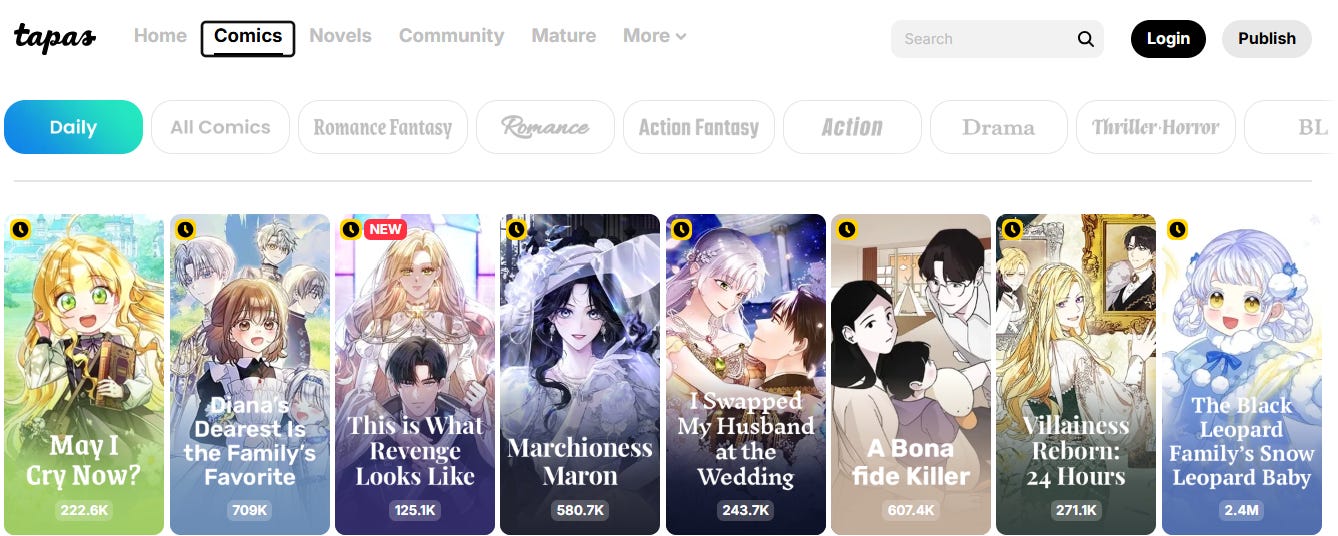
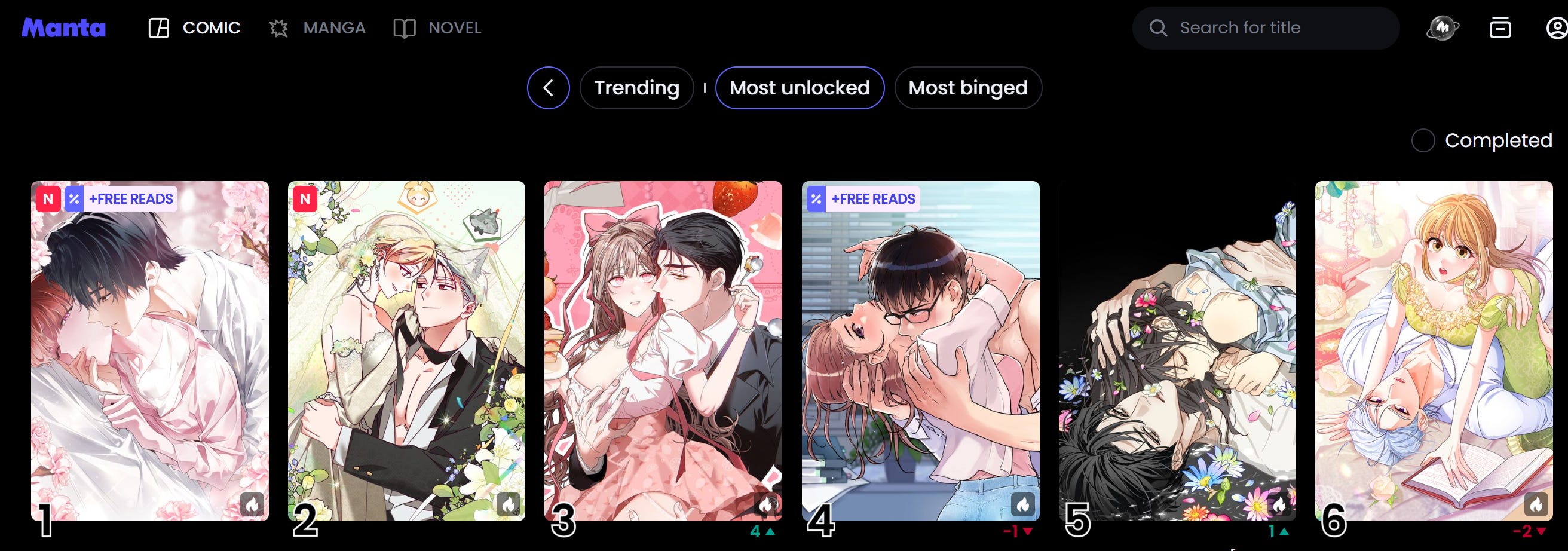
Webtoon platforms and publishers aren’t unfriendly to indie titles, but the fact of the matter is that high-polish action fantasy and romance fantasy titles are where the money is at. And indie creators can’t compete with studios in that regard.
So, if independent webtoon creators aren’t finding traction on webtoon platforms, where are they going?
Back on the Gram
Every year, the Korean government sponsors a white paper that tracks multiple metrics in the Korean manhwa industry (webtoons included). One topic is always the mediums on which readers choose to read their webtoon content.
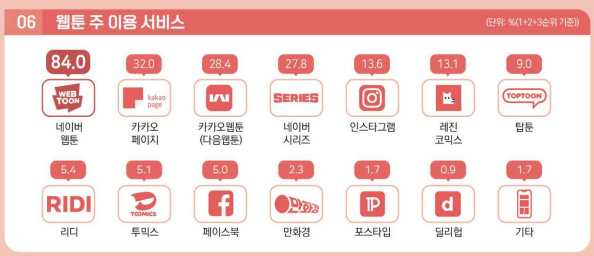
The top five platforms shouldn’t be a surprise to anyone. Naver Webtoon, KakaoPage, Kakao Webtoon, and Naver Series. But the fifth… Instagram. A whopping 13.6% of people surveyed listed Instagram as one of the top 3 media platforms on which they read webtoons. That beat out actual webtoon platforms like Lezhin, Toptoon, Ridi, Toomics and Manhwa-kyung (a defunct platform that no longer exists).
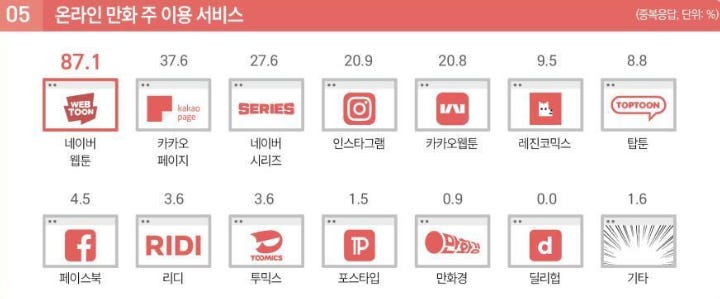
It got “worse” the next year in 2024 when Instagram rose to 4th in the charts, outranking all the previously mentioned platforms as well as Kakao Webtoon. Now, Kakao Webtoon might be a nearly defunct platform, but it traces its lineage back to Daum Webtoon which literally outranked Naver Webtoon at one point.
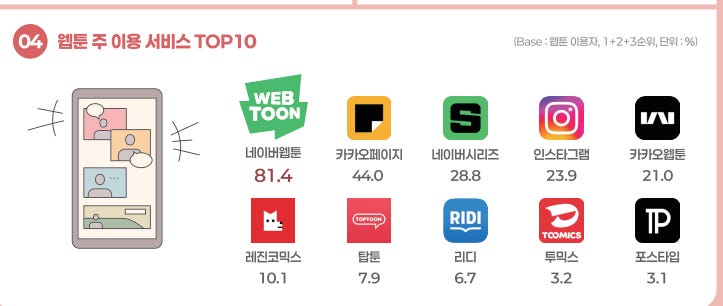
In 2025’s white paper, the rankings held steady but the % of respondents who said Instagram was one of their top 3 platforms to read webtoons on grew 3%. And it wasn’t long before we got an industry term for these titles: “instatoons”.
The Rise of Instatoons
Now, it is a false equivalency to say that Instagram is publishing webtoons in the same vein as Naver or Kakao because most of the content on Instagram tends to be shorter, slice-of-life and comedy comics. In the west, it’s the kind of content we’re used to seeing on Instagram.
But it’s important to remember that 4-cut comics and slice-of-life stories were once the bread and butter of webtoon platforms.
The first waves of webtoon titles were intensely personal and stylized. It’s impossible not to think of Sound of Your Heart or Soonjeong Manhwa when thinking of the first generation, but also Itaewon Class and Bloodhound which are completely unpolished when stood next to more recent launches.
In Korea, instatoons are a return to those highly stylized and eclectic forms of storytelling. They’re a direct response to the perfectly rendered titles that dominate the webtoon charts on mainstream platforms.
And because Instagram doesn’t allow for direct monetization, instatoons instead focus on building brands and audiences. Considering this was how the first generation of webtoon titles operated on Naver and Daum… we’ve essentially just gone back in time.
Time will tell if instatoons will find ways to be profitable and sustainable, but without significant support from platforms and publishers, independent creators don’t have much of a choice.
The webtoon industry hasn’t had the same cycle in western markets where it’s still considered niche or even a secondary content market compared to established western comics or Japanese manga.
But the grumbling is certainly growing louder.
WEBTOON’s promotion (or lack thereof) of the Canvas platform has been controversial for indie creators and studios ever since the CANVAS Creator Rewards Program was phased out back in 2023 (leading to lower payouts for creators).
It’s a significant shift from pre-COVID when CANVAS and Tapas’ indie sections were alive and thriving. But with the shift towards sales and profits, there’s a massive vacuum that WEBTOON and Tapas used to occupy.
And we know how nature feels about vacuums.
Thanks for writing about it, I feel as if webtoons has been developing this problem for a while now.
"we know how nature feels about vacuums" is a GREAT last line
Have Webtoon's PR representatives sent you any angry emails for mentioning the canvas thing? They did that to me when I wrote about it on k-comics beat...